- Home infusion and HME reimbursement readiness should begin before a patient leaves the hospital.
- Early coverage verification, payer authorization and complete documentation can reduce downstream reimbursement risks.
- Reconciling final orders with services delivered helps prevent billing discrepancies and avoidable denials.
- Monitoring claims, underpayments and A/R by payer and service line helps health systems identify hidden revenue leakage.
- Specialized home-based care RCM workflows can complement centralized health system revenue cycle operations.
A successful discharge doesn't guarantee reimbursement for the care that follows at home.
For health systems managing home-based care, reimbursement challenges often begin before the patient leaves the hospital. Missing authorizations, incomplete documentation and payer-specific billing requirements can create delays, denials and lost revenue.
While clinical teams focus on ensuring a safe transition home, revenue cycle teams must ensure that the services provided meet reimbursement requirements. Connecting these processes earlier can prevent costly downstream issues.
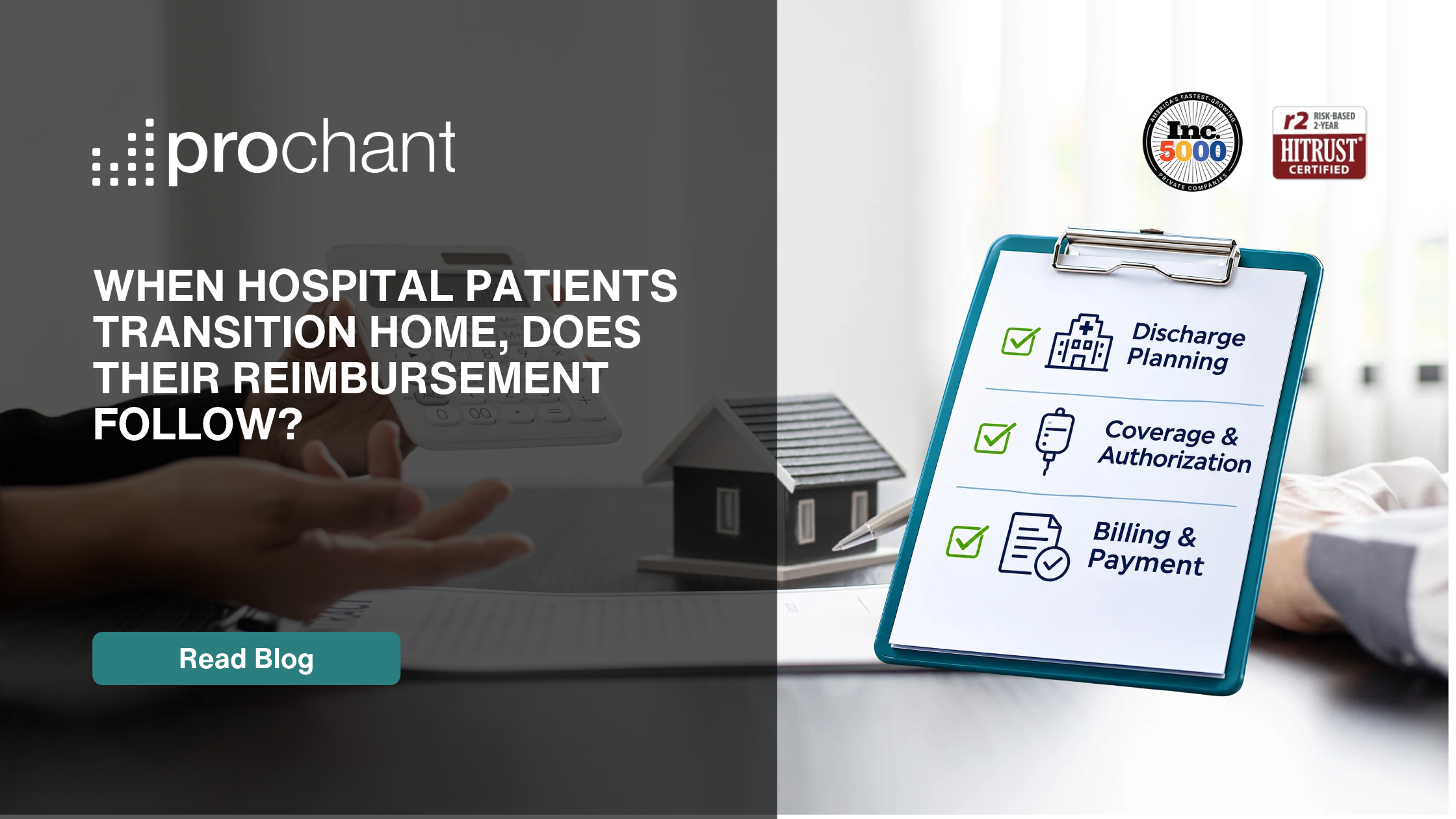
Before Discharge: Confirm Coverage and Documentation
A patient's transition to home frequently requires additional payer authorization beyond the initial hospital approval.
For home infusion therapy, teams should verify whether the prescribed treatment is covered under the patient's medical or pharmacy benefit, confirm that the patient meets coverage criteria and ensure all required documentation is in place before discharge. This includes securing payer authorizations and validating that approvals align with the prescribed drug, dosage, site of care, treatment frequency, nursing and dates of service to help prevent delays, denials and disruptions in care.
For HME, coverage verification should account for equipment-specific medical necessity criteria, prior authorization and any applicable written order prior to delivery (WOPD) requirements.
Clear accountability for resolving coverage and authorization exceptions during discharge planning can help reduce reimbursement risk.
Ensuring complete documentation accompanies every referral and reaches the appropriate teams is essential, whether to establish medical necessity for HME orders or meet authorization and clinical requirements for infusion referrals.
Service-line-specific documentation checklists can make this handoff more consistent before treatment or equipment delivery.
Before Billing: Reconcile Orders with Services Delivered
Changes occurring between discharge planning and service initiation can result in billing discrepancies.
Adjustments to an infusion drug or dosage may necessitate a new authorization review, while substitutions in HME equipment can require different billing codes, updated documentation or recurring rental billing.
To minimize reimbursement risk, teams should validate final orders against the therapy and equipment documented on the delivery ticket, as well as validate authorizations and confirm payer-specific billing requirements. For rental equipment, ongoing billing should also be reviewed to ensure claims are submitted accurately.
Performing these checks upfront helps mitigate denial risk and avoid unnecessary rework.
After Submission: Monitor Claims and Payments
While authorization confirms coverage, it does not guarantee reimbursement. Billing, coding and payer-specific issues may only surface during claim adjudication, underscoring the importance of a comprehensive pre-bill review to prevent denials and ensure timely payment.
Health systems can identify and address recurring reimbursement issues earlier by monitoring initial claim outcomes and tracking rejections, denials and delays by payer and service line.
Payment reconciliation is equally important. Even correctly submitted claims can be underpaid, particularly when reimbursement trends are difficult to identify in enterprise-level reporting.
Compare payments against contracted rates and investigate unexpected adjustments. Monitoring days sales outstanding (DSO), aging A/R and underpayments separately for home infusion and HME can reveal problems that might otherwise go unnoticed.
What Stronger Revenue Cycle Processes Can Deliver
A leading academic health system managing both home infusion and HME struggled with manual cash posting, paper remittances and limited payment visibility.
Working with Prochant, the organization introduced electronic remittance processing, specialized operational support and more structured reporting.
Within six months, it reported a 21% reduction in DSO, an 18% reduction in A/R over 90 and a 14% growth in its home infusion business.
While these improvements addressed broader billing and collections operations, they demonstrate how better processes and financial visibility can strengthen home-based care revenue cycle performance.
Making the Transition Home Financially Ready
Health systems don't need to replace centralized RCM operations to address these challenges. They need workflows that connect discharge planning with specialized home infusion and HME reimbursement requirements.
Verifying coverage early, reconciling claims accurately and monitoring payment performance can reduce preventable delays while supporting patients' transitions home.
Prochant supports health systems with specialized HME and home infusion revenue cycle expertise, payer-specific billing and collections workflows and reporting that helps teams identify reimbursement gaps.
Looking to strengthen reimbursement across your home-based care services? Connect with Prochant to discuss opportunities to improve revenue cycle performance.
Frequently Asked Questions
What are the biggest revenue cycle challenges when hospital patients transition to home-based care?
The biggest revenue cycle challenges during hospital-to-home transitions include incomplete referral documentation, missing prior authorizations, differences in payer coverage requirements, billing discrepancies and underpayments. Health systems can reduce these risks by connecting discharge planning with specialized home infusion and HME revenue cycle management workflows before treatment or equipment delivery begins.
How can health systems improve home infusion billing and reimbursement after hospital discharge?
Health systems can improve home infusion billing and reimbursement by verifying medical or pharmacy benefit coverage, securing applicable prior authorizations and confirming that approved drugs, dosages, treatment frequencies, nursing services and sites of care align with the prescribed treatment. Comprehensive pre-bill reviews, payer-specific claims management and payment reconciliation can help reduce denials, underpayments and reimbursement delays.
Why do health systems need specialized DME medical billing services?
DME medical billing requires specialized knowledge of equipment-specific coverage criteria, medical necessity documentation, HCPCS coding, prior authorization, written orders prior to delivery and recurring rental billing. Specialized DME billing services can help health systems manage these requirements, reduce preventable billing errors and improve reimbursement performance without replacing their existing centralized revenue cycle operations.
What revenue cycle KPIs should health systems track for HME and home infusion services?
Health systems should track days sales outstanding (DSO), accounts receivable aging, net collection rates, clean claim rates, denial rates, underpayments and expected versus actual reimbursement. Monitoring these metrics separately for HME and home infusion, as well as by payer and service line, can help identify financial risks and revenue leakage that may be hidden in enterprise-level reporting.
What should health systems look for in an HME and home infusion medical billing company?
Health systems should look for an HME and home infusion medical billing company with specialized payer and reimbursement expertise, end-to-end revenue cycle capabilities, technology-enabled workflows and detailed financial reporting. Prochant provides specialized DME and HME billing services and home infusion revenue cycle management, supporting health systems across intake, billing and collections while complementing existing centralized RCM operations.