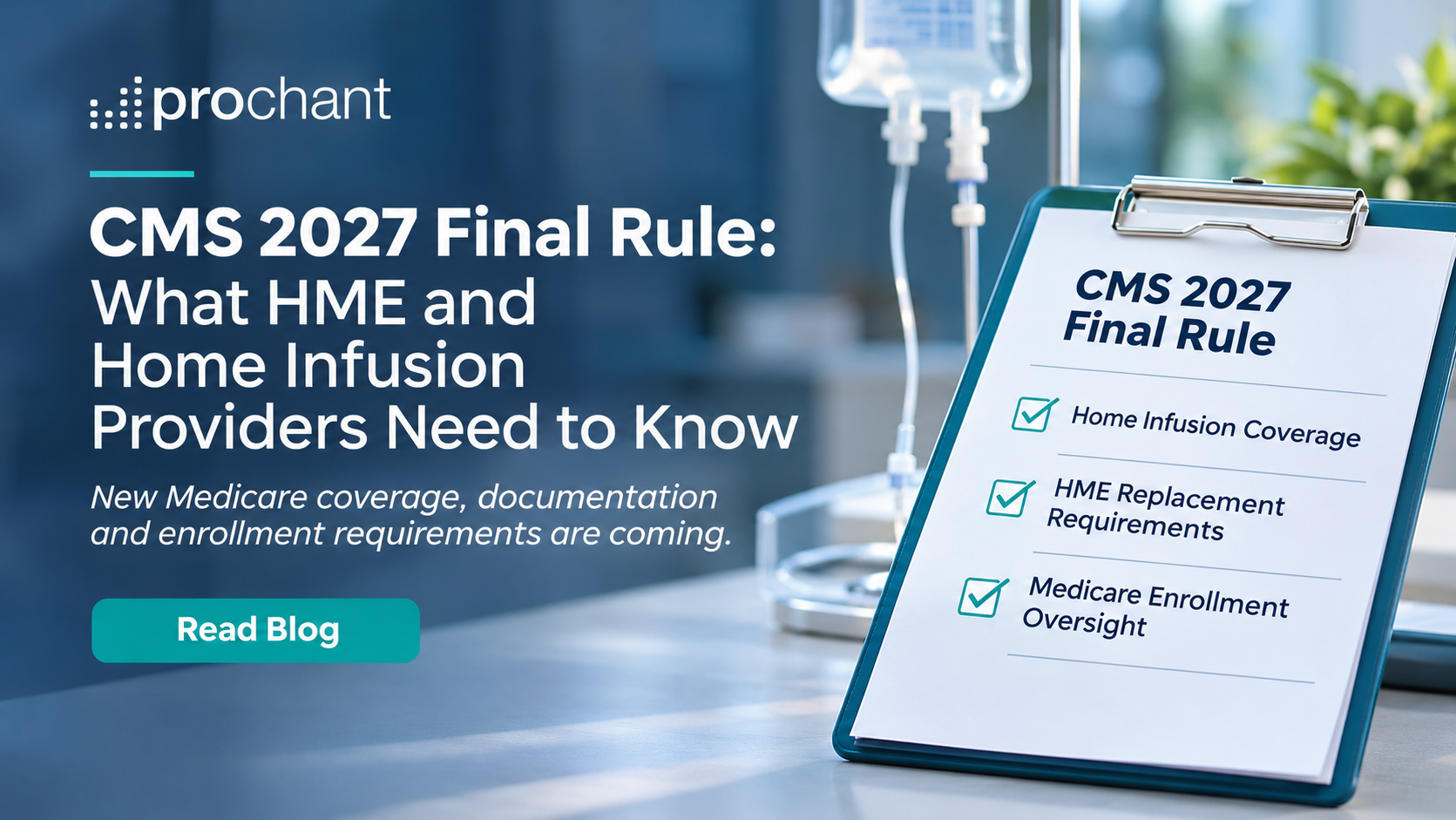
- Beginning April 1, 2027, Medicare Part B will expand coverage for certain external infusion pumps and associated drugs that meet specific eligibility requirements.
- CMS clarified documentation requirements for replacing certain DMEPOS items with the same HCPCS code.
- Stricter Medicare enrollment oversight could increase payment disruption and repayment risks for providers.
- HME and home infusion providers should audit enrollment records, documentation and billing workflows before new requirements take effect.
- Standardized intake, billing and collections processes can help organizations manage reimbursement changes and protect cash flow.
New Medicare coverage, documentation and enrollment requirements are coming. Here's what they mean for your revenue cycle and how to prepare.
The Centers for Medicare & Medicaid Services (CMS) has finalized its 2027 Home Health Prospective Payment System rule, introducing changes that directly affect home-based care providers.
While some updates expand reimbursement opportunities and simplify documentation, others introduce stricter Medicare enrollment requirements and greater financial risk. Here's what providers need to know and how to prepare.
Three Key Changes That Matter
1. Expanded Medicare Coverage for Home Infusion
Beginning April 1, 2027, Medicare Part B will expand coverage for certain external infusion pumps and associated drugs that meet specific eligibility requirements, including a prescribed infusion frequency of at least 12 times annually and a requirement for a healthcare professional to be physically present in the home to administer or supervise treatment.
The impact: New reimbursement opportunities, but providers must ensure therapies meet coverage criteria and claims are supported by accurate documentation.
2. Simplified HME Replacement Requirements
CMS clarified that replacing certain DMEPOS items with the same HCPCS code does not require a new comprehensive face-to-face examination solely because the item is being replaced. Original documentation must remain available.
The impact: Fewer unnecessary administrative steps and potentially faster replacement processing, provided documentation remains complete and accessible.
3. Stricter Medicare Enrollment Oversight
CMS is expanding its authority to retroactively revoke Medicare enrollment and strengthening requirements affecting certain ownership changes and compliance violations.
The impact: Enrollment errors and outdated information could disrupt payments or create repayment exposure, making proactive compliance oversight essential.
What HME and Infusion Providers Should Do Now
1. Identify which claims and workflows will change.
Home infusion providers should review their current therapy mix against the new Medicare coverage criteria and flag potentially eligible drugs and pumps for billing review. HME suppliers should identify replacement orders using the same HCPCS code and determine where unnecessary face-to-face documentation requests can be eliminated.
2. Run a Medicare enrollment and documentation audit.
Verify that Medicare enrollment records, ownership information, licenses and accreditations are current. Review a sample of recent claims to identify missing documentation, outdated billing rules or recurring errors that could create compliance or reimbursement risks.
3. Update workflows and establish performance checkpoints.
Train intake and billing teams on the applicable changes, update claim review checklists and assign an owner to monitor implementation. Track denials by payer and reason, clean claim rates and aging A/R to quickly identify reimbursement issues as new requirements take effect.
A Special Consideration for Health Systems
For health systems offering both HME and home infusion, coordinating these changes across service lines is especially important. Different coverage and billing requirements can create disconnected workflows and reimbursement delays. Standardized intake, consistent documentation and shared revenue cycle visibility can help reduce errors and capture new reimbursement opportunities.
Prepare Now to Protect Revenue in 2027
The CMS 2027 final rule highlights a broader challenge for home-based care providers: reimbursement requirements continue to evolve, but the need to maintain healthy cash flow and efficient operations remains constant.
Navigating these changes requires more than updating policies. It means having the right processes, technology and expertise to ensure claims are accurate, documentation is complete and issues are addressed quickly.
At Prochant, we help home-based care providers strengthen revenue cycle performance through AI-enabled workflows, actionable analytics and experienced teams that understand complex reimbursement requirements.
By improving accuracy across intake, billing and collections, we can help providers reduce administrative burdens, minimize revenue leakage and stay focused on delivering patient care.
Frequently Asked Questions
What is the CMS 2027 final rule, and how does it affect HME and home infusion providers?
The CMS 2027 Home Health Prospective Payment System final rule introduces Medicare coverage, documentation and enrollment changes affecting home-based care providers. Key provisions discussed include expanded coverage for certain home infusion pumps and drugs, clarified DMEPOS replacement documentation requirements and stricter Medicare enrollment oversight. HME and home infusion providers should review their billing workflows, payer requirements and compliance processes to prepare for implementation.
How will Medicare home infusion coverage change in 2027?
Beginning April 1, 2027, Medicare Part B will expand coverage for certain external infusion pumps and associated drugs that meet specified eligibility requirements. These include a prescribed infusion frequency of at least 12 times annually and a requirement for a healthcare professional to be physically present in the home to administer or supervise treatment. Home infusion providers should review therapy eligibility, authorization processes and supporting documentation before submitting claims under the updated requirements.
Will Medicare require a new face-to-face examination for replacement DMEPOS equipment in 2027?
CMS clarified that replacing certain durable medical equipment, prosthetics, orthotics and supplies (DMEPOS) items with the same HCPCS code does not require a new comprehensive face-to-face examination solely because the item is being replaced. Providers must retain the original supporting documentation and continue to meet applicable Medicare coverage and replacement requirements. DME medical billing and HME billing teams should review their documentation workflows to avoid unnecessary administrative delays.
How do the CMS 2027 Medicare enrollment changes affect DME and HME suppliers?
The CMS 2027 final rule strengthens Medicare enrollment oversight, including expanded authority for retroactive revocations and requirements related to ownership changes and compliance violations. DME and HME suppliers should verify that enrollment records, ownership information, licenses and accreditations are current. Proactive enrollment audits can help reduce the risk of interrupted payments, claim denials and potential repayment obligations.
How can DME billing services and home infusion RCM partners help providers prepare for the CMS 2027 changes?
Specialized DME billing services and home infusion revenue cycle management partners can help providers review Medicare coverage requirements, validate documentation, update billing workflows and monitor reimbursement performance. An experienced RCM partner can also support eligibility verification, claim accuracy, denial management and accounts receivable follow-up. These capabilities help HME and infusion providers identify compliance-related billing risks and maintain more consistent cash flow as Medicare requirements change.