- AI is moving from a buzzword to a business strategy. Providers are focusing on practical applications that deliver measurable value.
- Competitive bidding preparations are gaining momentum. Suppliers should begin evaluating their readiness for the next round now.
- Accreditation and compliance expectations continue to tighten. Proactive operational oversight is becoming increasingly important.
- Payer mix shifts are creating financial pressure. Recent legislation is reshaping reimbursement dynamics for providers.
- Potential Medicare timely filing changes could increase pressure on revenue cycle teams. Faster claims processing may become more critical than ever.
Welcome to Proof of Delivery, a podcast dedicated to unpacking the complexities of revenue cycle management in the Home Medical Equipment (HME) industry. From navigating intake and documentation to overcoming billing challenges and payer requirements, each episode explores the real issues providers face every day. Join industry leaders and experts as they share perspectives on emerging trends, regulatory changes and operational strategies, offering practical insights to help you drive stronger outcomes.
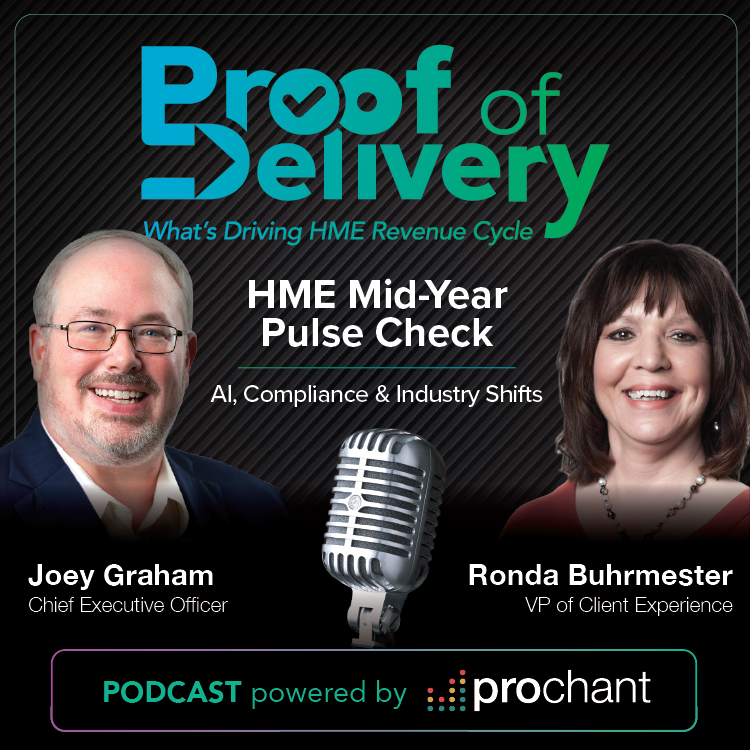
POD Episode 2: The HME Mid-Year Pulse Check: What’s Changing & What's Next
The HME industry continues to evolve at a rapid pace, with new regulatory requirements, technology advancements and reimbursement pressures reshaping how providers operate. In Episode 2 of Proof of Delivery, hosts Joey Graham and Ronda Buhrmester take a closer look at the developments currently impacting suppliers and discuss what organizations should be doing now to prepare for what's ahead.
From the realities of implementing AI to major competitive bidding updates, stricter accreditation standards and legislative changes that could affect reimbursement timelines, this episode delivers actionable insights for providers focused on protecting revenue, maintaining compliance and improving operational performance.
Key Takeaways from Episode 2
- AI is moving from a buzzword to a business strategy, forcing providers to focus on practical applications that deliver measurable value.
- Competitive bidding preparations are gaining momentum, and suppliers should begin evaluating their readiness for the next round now.
- Accreditation and compliance expectations continue to tighten, increasing the importance of proactive operational oversight.
- Payer mix shifts driven by recent legislation are creating financial challenges that providers cannot afford to ignore.
- Potential changes to Medicare timely filing limits could significantly increase pressure on revenue cycle teams to accelerate claims processing.
While each of these topics presents its own challenges, together they point to a larger trend: providers are being asked to operate with greater efficiency, visibility and accountability than ever before. Organizations that stay informed and adapt quickly will be better positioned to navigate industry changes while protecting both patient care and financial performance.
Want to hear the full discussion?
Tune in to Episode 2 now to stay ahead of the changes impacting HME providers.
Frequently Asked Questions
What is Proof of Delivery?
Proof of Delivery is a podcast focused on revenue cycle management and operational challenges within the Home Medical Equipment (HME) industry. The podcast explores topics including intake, billing, compliance, reimbursement and industry trends.
What topics are covered in Proof of Delivery Episode 2?
Episode 2 covers AI adoption in HME, competitive bidding updates, accreditation standards, compliance expectations, payer mix shifts, reimbursement pressures and potential Medicare timely filing changes affecting providers.
Why is competitive bidding important for HME providers?
Competitive bidding can significantly impact reimbursement rates, operational strategy and financial performance for HME providers. Organizations are being encouraged to begin preparing now for future rounds and evolving compliance expectations.
How is AI being used in the HME industry?
AI is increasingly being used to improve operational efficiency, streamline workflows, support revenue cycle management and provide greater visibility into reimbursement performance across HME organizations.
Why are operational efficiency and revenue cycle performance becoming more important in HME?
As reimbursement pressure, regulatory complexity and compliance expectations continue to increase, providers are being asked to operate with greater efficiency, visibility and accountability to maintain strong financial and operational performance.