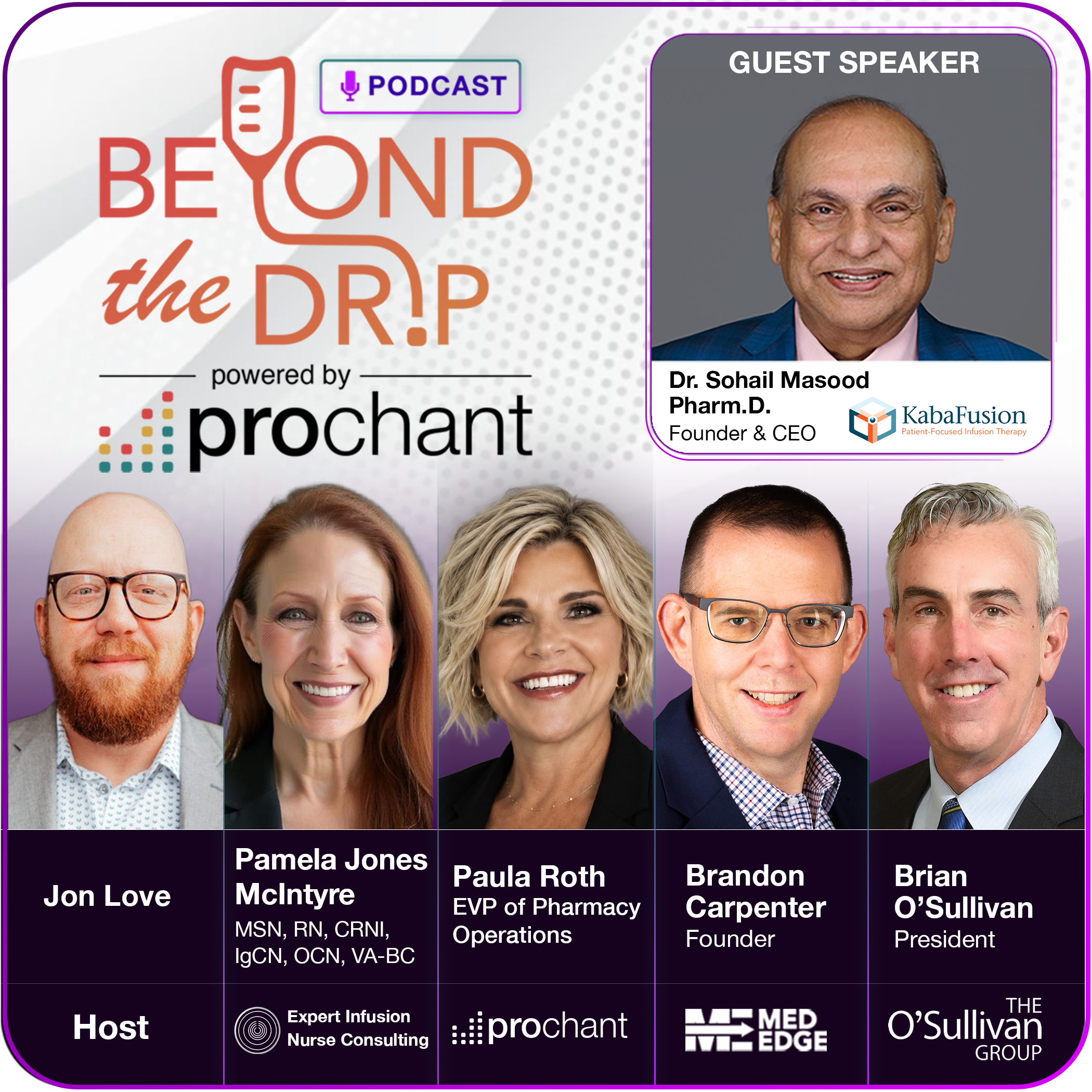
Welcome to Beyond the Drip, where we dive into the fascinating world of Infusion Pharmacy, from Home Infusion to Ambulatory Infusion Centers. Expect topical conversations on the latest happenings in Infusion from industry leaders who will bring you the latest news, trends and innovations in the infusion industry, as well as expert insights and stories to keep you informed and inspired.
In this episode of Beyond the Drip, the hosts sit down with returning guest Connie Sullivan, President & CEO of the National Home Infusion Association (NHIA), for a grounded and timely conversation on where the industry stands heading into 2026.
From mounting pressure on drug pricing to the realities of Medicare coverage gaps, Connie breaks down the forces shaping access, reimbursement and care delivery. The discussion also explores the growing role of home infusion in rare disease treatment, what recent legislation does (and doesn’t) fix and why providers continue to face complexity at every step of the revenue cycle.
AI is everywhere, but where does it actually fit in infusion today? And what should providers be cautious about? This episode tackles those questions head-on, offering practical insight into where technology can help and where human expertise remains essential.
If you’re trying to keep up with policy changes, payer dynamics and the operational challenges behind the scenes, this conversation brings clarity without the fluff.
- Drug pricing pressure is destabilizing the market, impacting access, reimbursement and overall care delivery.
- Medicare coverage gaps remain a critical barrier, often limiting patient access to home infusion once they turn 65.
- The Joe Fiandra Act falls short in expanding access due to structural limitations, such as the continued pump requirement.
- Rare disease therapies are rapidly shifting to the home, with the focus now on value and quality of life rather than safety concerns.
- Home infusion revenue cycle complexity is unmatched, requiring intensive front-end work with little standardization across payers.
- AI shows promise in operational efficiency and storytelling but isn’t yet reliable for complex clinical or intake decisions.
As the episode wraps, one message is clear: the home infusion industry is at a pivotal moment. Advocacy efforts continue to gain traction across administrations, scrutiny of payers and vertical integration is increasing and providers are being challenged to better articulate the value they bring, especially the clinical impact of pharmacists on patient outcomes.
While challenges around reimbursement, policy and operations persist, there’s also meaningful momentum driven by innovation, collaboration and a growing recognition of the value home-based care delivers.