- NHIA 2026 felt like a turning point for infusion. Strategy, technology, and operations are converging in new ways.
- AI is moving from hype to practical use. The strongest conversations focused on intake, benefits verification, prior authorization, and revenue cycle visibility.
- Site of care is becoming a strategic battleground. Providers are balancing cost, reimbursement, patient experience, and operational feasibility.
- Intake is no longer just a front-end task. It is becoming the control point for downstream revenue cycle performance.
- Infusion providers need connected workflows. Organizations that align intake, contracting, billing, and site-of-care decisions will be better positioned for growth.
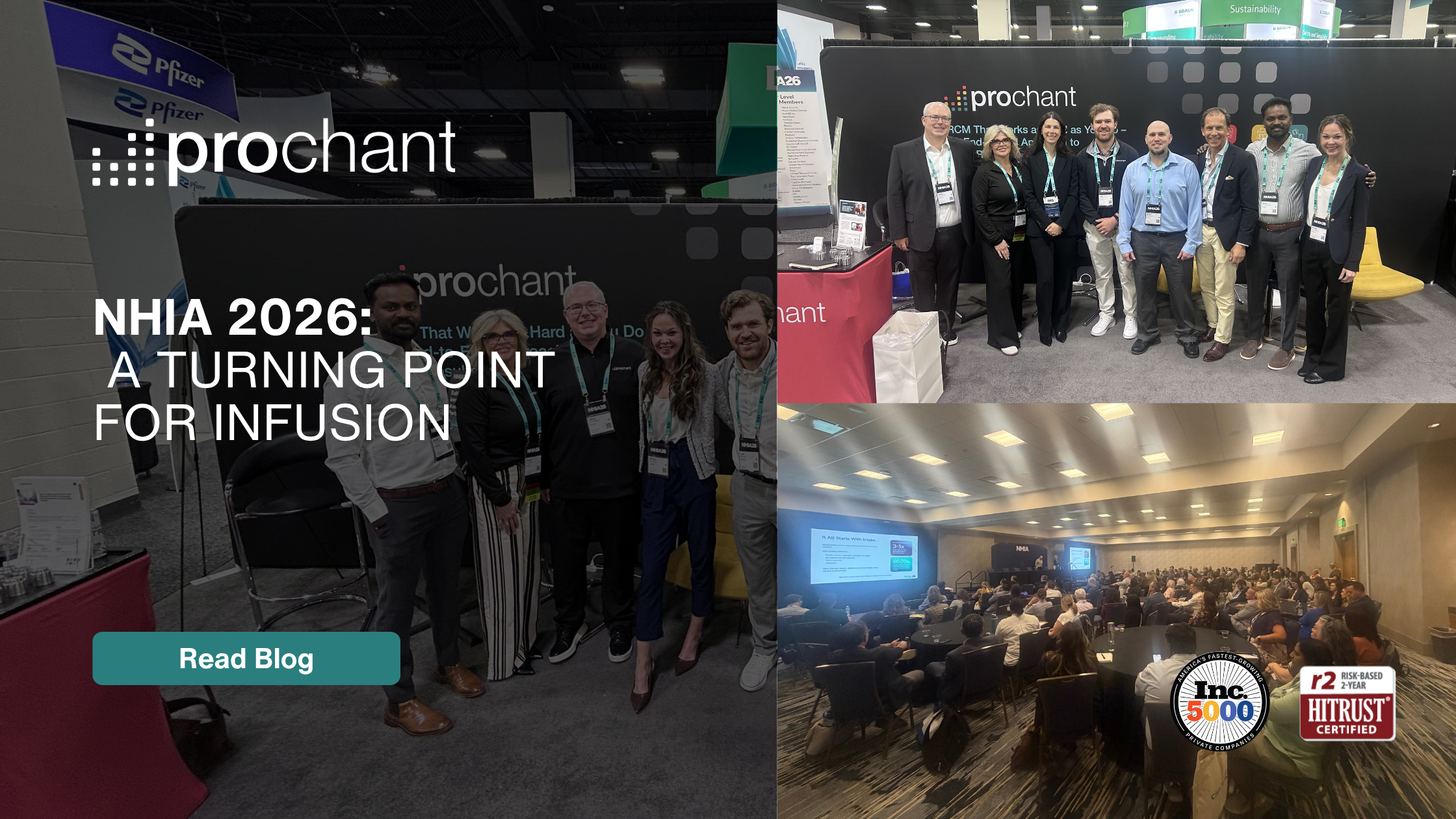
Our team left NHIA 2026 energized, and it felt different than years past. This year didn’t just feel like another industry gathering. It felt like a turning point for infusion, where strategy, technology, and operations are beginning to converge in new ways.
We saw that momentum firsthand, whether it was connecting with hundreds of attendees at our Hidden Drip speakeasy experience, sparking competition at our booth during our Putting Challenge, or engaging in meaningful conversations throughout the event.
Those conversations, both in sessions and across the conference floor, pointed to a few clear themes shaping the future of infusion.
The Big Themes from NHIA 2026
1. AI Is Everywhere, but Practical Use Is What Matters
AI dominated the agenda. Nearly every track, panel, and vendor conversation touched on it in some way. However, beneath the buzz, a more grounded conversation is emerging.
Organizations aren’t looking for AI to replace decision-making. They’re looking for it to enhance it.
The most meaningful AI conversations centered around:
- Streamlining intake workflows
- Accelerating benefits verification and prior authorization
- Delivering insights into revenue cycle performance
The takeaway was clear: AI is moving from hype to utility, but only for organizations focused on real operational challenges.
2. Site of Care Is the Strategic Battleground
If AI was the loudest theme, site of care was the most urgent. Across sessions and conversations, providers are grappling with increasingly complex questions.
Providers are asking:
- Where should care be delivered?
- How do we balance cost, reimbursement, and patient experience?
- How do we operationalize those decisions at scale?
Several forces are driving this shift, including payer pressure pushing care out of high-cost settings like HOPDs, the growth of home infusion and ambulatory infusion centers, and increased focus on total cost of care.
Providers are trying to balance:
- Financial outcomes
- Patient affordability
- Clinical appropriateness
- Operational feasibility
Many acknowledged they don’t yet have the processes or tools to do this effectively.
3. Intake Can Be a Bottleneck — and a Significant Opportunity
Underneath both AI and site-of-care conversations was the consistent theme that intake is not optimized, and it’s holding everything back.
Common intake challenges included:
- Poor intake processes leading to incorrect site-of-care decisions
- Disconnects between intake, contracting, and billing
- Missed opportunities to prevent downstream revenue leakage
It reinforced that intake isn’t just a front-end task. It’s the control point for the entire revenue cycle.
What This Means for the Industry
NHIA 2026 made it clear that the home infusion industry is entering a new phase. AI is moving into real operational use. Site of care is driving strategic decision-making across organizations. Intake must be recognized as the foundation for success.
For organizations that can connect these dots, the opportunity is significant.
We’re excited about where the industry is headed, and even more excited to continue helping our partners navigate what comes next.
Keep the NHIA Conversation Going.
If you connected with us at NHIA, or missed us this year, reach out to speak with an expert about intake, site-of-care strategy, and revenue cycle performance.
Frequently Asked Questions
What were the biggest themes from NHIA 2026?
The biggest themes from NHIA 2026 were the practical use of AI in infusion operations, the growing importance of site-of-care strategy, and the need to improve intake workflows. Together, these themes point to a more connected future for home infusion revenue cycle management.
How is AI being used in home infusion revenue cycle management?
AI is increasingly being used to streamline intake workflows, accelerate benefits verification and prior authorization, improve visibility into revenue cycle performance, and support more consistent decision-making. The most valuable AI use cases are tied to real operational challenges, not broad automation for its own sake.
Why is site of care important for infusion providers?
Site of care affects reimbursement, patient affordability, payer requirements, clinical appropriateness, and operational feasibility. As payers push care away from higher-cost settings, infusion providers need stronger processes and visibility to determine where care should be delivered and how those decisions affect revenue cycle performance.
Why is intake so important in home infusion?
Intake is the starting point for eligibility, documentation, prior authorization, site-of-care decisions, and reimbursement accuracy. When intake is inconsistent or disconnected from contracting and billing, it can create downstream denials, delays, and revenue leakage.
How can Prochant help infusion providers improve revenue cycle performance?
Prochant helps infusion providers strengthen intake, billing, collections, denial management, and revenue cycle visibility. By combining an expert team of infusion RCM specialists with technology-driven workflows and analytics, Prochant supports cleaner processes, stronger reimbursement performance, and scalable growth.