- Home infusion providers are scaling through multiple pressures at once. System transitions, AI adoption and increasing compliance demands are reshaping operations.
- System change requires a phased, workflow-first approach. Implementations should reduce disruption while supporting adoption and operational continuity.
- AI is becoming more relevant in home infusion. Providers should explore practical use cases while maintaining governance, HIPAA protections and human oversight.
- Compliance must move upstream. Documentation validation and compliance checks should happen earlier in the process to reduce denials and revenue leakage.
- Scalable growth depends on operational discipline. Providers need efficient workflows, strong compliance practices and thoughtful technology adoption.
The home infusion industry is evolving rapidly, and providers are being challenged to scale operations while navigating increasing compliance demands, system transitions and emerging AI technologies.
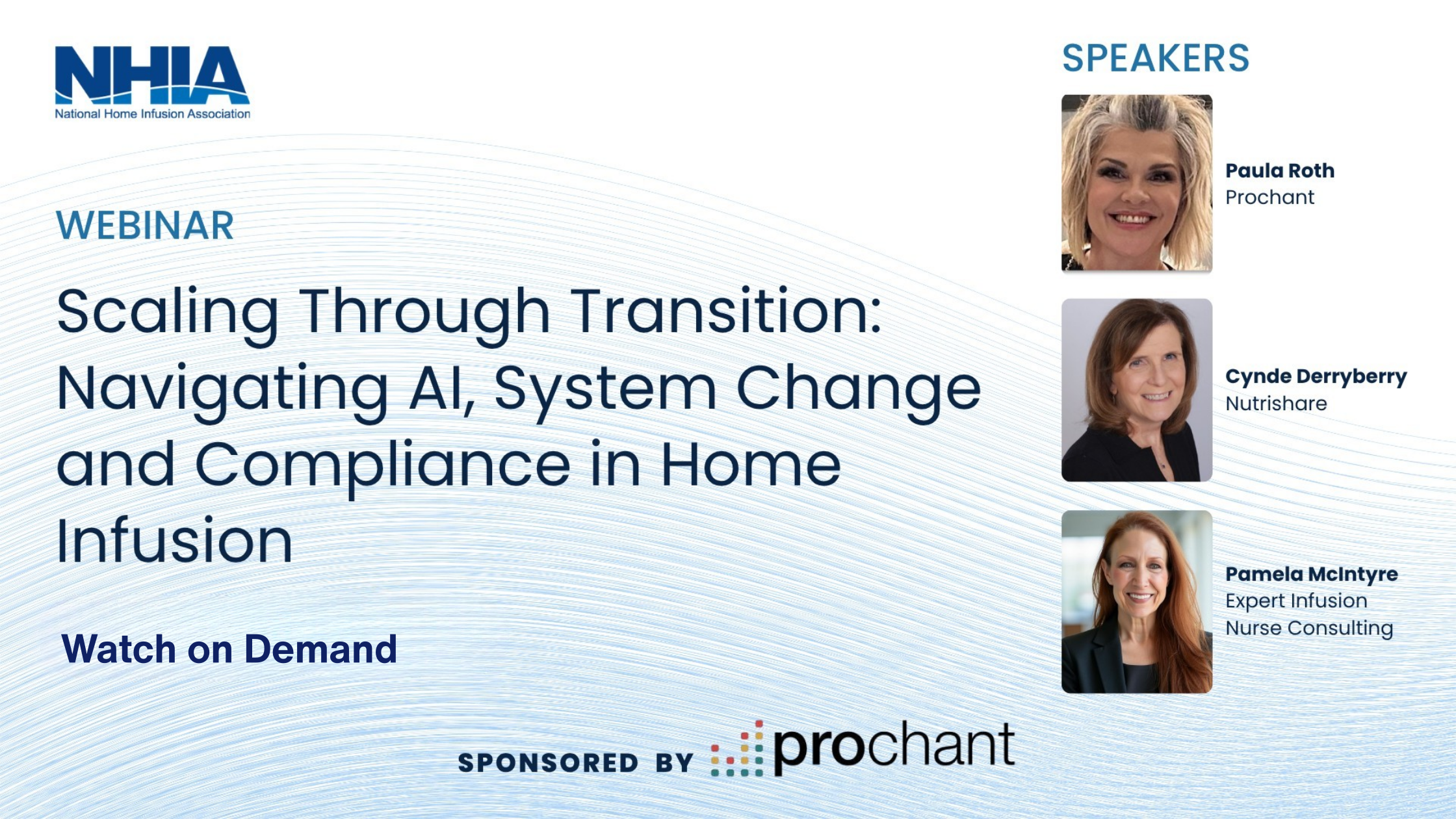
During the recent NHIA webinar, Scaling Through Transition: Navigating AI, System Change and Compliance in Home Infusion, industry leaders from Prochant, Nutrishare and Expert Infusion Nurse Consulting shared practical strategies that infusion providers can use to grow efficiently while protecting revenue and maintaining compliance.
The Three Forces Shaping Growth in Home Infusion
Today’s providers are balancing three major operational pressures simultaneously:
- System transitions and technology upgrades
- The rapid rise of AI applications
- Increasing compliance and payer scrutiny
While each presents challenges independently, the panel emphasized that organizations must learn to manage all three together to successfully scale operations.
Minimizing Disruption During System Change
System implementations can create workflow disruptions, billing delays and productivity slowdowns if not approached strategically.
The webinar highlighted several best practices for managing change successfully:
- Implement changes in phases tied to workflow impact
- Prioritize integration over full system replacement
- Design workflows around real operational needs
- Involve frontline users early to improve adoption
Where AI Fits in Home Infusion Today
AI is already transforming revenue cycle and operational workflows across healthcare, and while adoption in home infusion has been slower, the industry must continue evolving to keep pace.
Speakers discussed specific AI use cases across home infusion operations and revenue cycle management, while also emphasizing the importance of strong governance, HIPAA protections and human oversight to ensure accuracy and compliance.
Compliance Is Now a Front-End Strategy
As payers adopt faster and more sophisticated review processes, compliance can no longer be treated as a downstream function.
The webinar outlined the importance of:
- Standardizing documentation expectations
- Aligning clinical and billing workflows
- Moving compliance checks earlier in the process
- Establishing consistent validation checkpoints
Organizations that fail to adapt risk increased denials, audit exposure, delayed reimbursement and revenue leakage.
Key Takeaways for Scaling Successfully
The session concluded with a tangible roadmap for navigating the operational, technological and compliance challenges shaping the future of home infusion. Attendees walked away with actionable strategies for scaling sustainably, improving operational efficiency and adapting to an increasingly complex landscape.