- Preventable denials start upstream: Many claim issues originate before submission and can be corrected earlier in the workflow.
- Pre-submission guardrails improve outcomes: Automated review helps increase clean claim rates while reducing downstream rework.
- Governance matters: Continuously updated payer logic ensures accuracy, compliance and long-term revenue integrity.
Home-based care operates in one of the most complex reimbursement environments in healthcare. When billing errors slip through, even minor ones can slow cash, strain teams and ripple across operations.
Most providers recognize recurring denial patterns, yet many of those denials originate from preventable issues that surface long before a claim is submitted.
As payer complexity increases and staffing pressures persist, pre-submission claim integrity has become one of the most effective and underutilized ways to improve financial performance without adding burden to already stretched teams.
The Hidden Cost of Preventable Denials
Denials don’t just delay cash. They drain staff time, erode morale and introduce unnecessary friction into an already complex reimbursement environment, especially for home medical equipment (HME), infusion and pharmacy and home health and hospice providers navigating diverse payer rules.
Across the industry, five avoidable issues consistently rise to the top:
None of these errors reflect poor care delivery. They reflect a system that asks billing teams to memorize hundreds of payer nuances while working at high volume and speed.
Moving Denial Prevention Upstream
Historically, denial management has been reactive and focused on fixing claims after payment fails. As volumes grow and payer rules become more nuanced, many organizations are rethinking that approach.
Increasingly, providers are shifting denial prevention earlier in the workflow, applying intelligence at the point where issues can be resolved quickly and with minimal disruption.
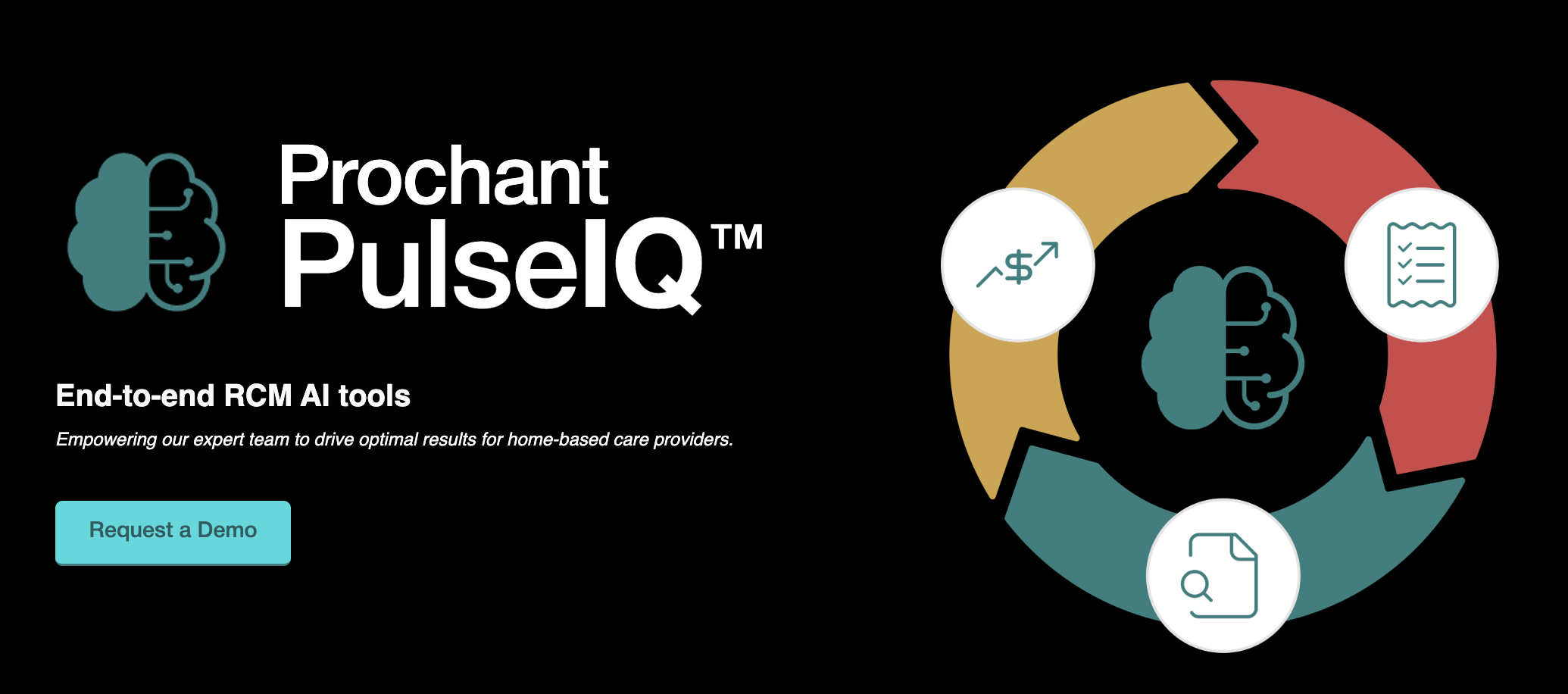
Within Prochant PulseIQ™, our end-to-end suite of AI-driven revenue cycle tools, BillingIQ supports this upstream approach by bringing automated, consistent review to claims before submission.
How Pre-Submission Guardrails Improve First-Pass Performance
Manual checks and spot audits were never designed to scale with today’s payer complexity. Pre-submission guardrails change that by applying automated, consistent review across every claim before submission.
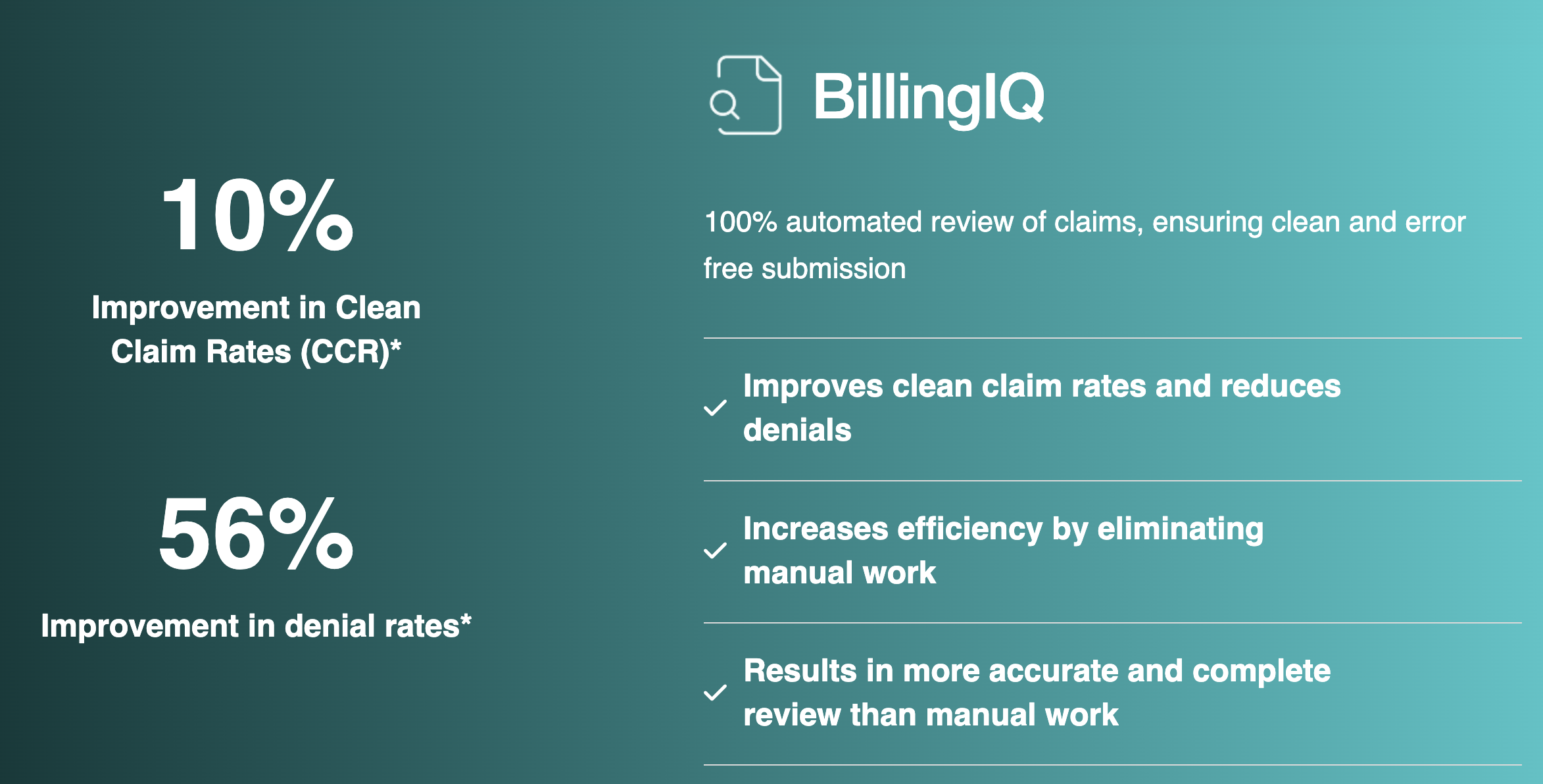
BillingIQ evaluates claims against payer-specific rules to identify coding and modifier inconsistencies, missing or conflicting data and risk patterns informed by historical outcomes. By reviewing every claim rather than a sample, providers achieve more accurate reviews while significantly reducing time spent on repetitive validation work.
For organizations that have adopted this approach, the impact is measurable. Providers have seen up to a 10% improvement in clean claim rates (CCR) and as much as a 56% reduction in denial rates, reflecting fewer preventable errors entering the system in the first place.
Beyond the metrics, fewer avoidable issues mean less downstream rework, fewer interruptions and more predictable cash flow.
Efficiency Without Sacrificing Accuracy
Home-based care providers face mounting pressure to do more with fewer resources. Efficiency gains are critical but only when they reinforce compliance rather than introduce risk.
Automated pre-submission review reduces manual workload while ensuring payer rules are applied consistently across teams and locations. Billing staff can focus on true exceptions that require judgment, while routine validation happens reliably in the background. When accuracy and efficiency advance together, denial prevention becomes an embedded operating discipline rather than an added task.
Governance: The Foundation of Trustworthy Automation
Automation is only as effective as the governance behind it.
Within BillingIQ, payer logic is continuously updated and audited to reflect evolving requirements. Accuracy is monitored, recommendations are reviewed and feedback loops allow the system to adapt as denial trends change. This governance layer ensures pre-submission guardrails remain aligned with regulatory expectations while supporting financial performance.
For providers, it establishes a durable link between compliance and revenue integrity that will withstand increasing complexity.
Why this matters
As home-based care continues to expand, reimbursement accuracy will only grow more critical. The future of revenue cycle performance lies not in chasing denials, but in building systems that make errors harder to introduce in the first place. Solutions like BillingIQ reflect this shift by embedding intelligence and guardrails directly into the claim process, helping providers support financial sustainability and operational confidence as complexity increases.
As claim complexity increases across HME, infusion and pharmacy, proactive claim integrity becomes a core driver of financial stability — reducing downstream rework while helping teams scale with confidence.
Explore how pre-submission guardrails can strengthen claim integrity and reduce preventable denials across your revenue cycle with BillingIQ and Prochant PulseIQ™.
Frequently Asked Questions
What are pre-submission guardrails in medical billing?
Short answer: Pre-submission guardrails are automated checks that catch claim issues before submission to reduce denials.
Pre-submission guardrails are automated checks applied before a claim is submitted to identify eligibility issues, coding errors, modifier problems and payer-specific rule conflicts. These safeguards help improve clean claim rates and reduce preventable denials.
How can HME and infusion pharmacy providers reduce preventable denials?
Short answer: Providers reduce denials by validating claims early and applying payer-specific billing logic before submission.
HME and infusion pharmacy providers reduce preventable denials by validating claims before submission, applying payer-specific billing logic and using automated review tools that catch errors early in the revenue cycle process.
Why is clean claim rate (CCR) important for revenue cycle performance?
Short answer: A higher clean claim rate means faster payments and less rework for billing teams.
Clean claim rate measures how many claims are accepted on first submission without edits or denials. Higher CCR improves cash flow, reduces administrative burden and shortens reimbursement timelines.
What challenges make HME and infusion pharmacy medical billing more complex than traditional billing?
Short answer: High-cost therapies, evolving payer rules and documentation requirements make these claims more complex.
HME and infusion pharmacy medical billing often involves payer-specific rules, modifiers, authorization dependencies and strict documentation standards. Specialized expertise and technology help reduce errors and prevent denials.
How do you choose the right HME and infusion pharmacy medical billing company?
Short answer: Look for a partner with deep industry expertise, strong payer knowledge and technology-driven denial prevention.
Choosing the right HME and infusion pharmacy medical billing company starts with evaluating experience, compliance governance, payer intelligence and tools that improve clean claim rates while supporting scalable growth.