- AI helps home-based care providers improve revenue cycle performance by identifying problems earlier.
- AI supports better decisions across intake, billing and collections.
- Prochant's IntakeIQ, BillingIQ and CollectionIQ apply AI to specific stages of the revenue cycle.
- AI helps shift revenue cycle management from reactive to proactive by catching issues before they escalate into denials.
- Prochant PulseIQ™ brings these capabilities together to help teams focus on the highest-impact work.
Artificial intelligence is giving home-based care providers new ways to improve revenue cycle performance by identifying problems earlier and helping teams focus on the work that matters most.
Across intake, billing and collections, AI can support better decisions at key points in the reimbursement process. It can surface missing information before it creates downstream issues, flag claims that may be at risk and help collections teams prioritize accounts with stronger recovery potential.
Intake: Get the Revenue Cycle Right From the Start
Many reimbursement problems begin before a claim is ever created. Intake teams are responsible for capturing patient information, processing referrals, verifying insurance and ensuring orders contain what is needed to move forward. When those processes depend heavily on manual review, small errors can create delays and denials later.
AI can help identify missing referral information, validate patient demographics, extract information from clinical and insurance documents, support insurance verification and flag inconsistent or incomplete order information.
With Prochant's IntakeIQ, AI and automation support referral capture, demographic validation, insurance verification and order processing while connecting those workflows with EHR systems. The result is cleaner information entering the revenue cycle and fewer avoidable issues reaching billing.
Billing: Identify Claim Risk Before Submission
Billing teams must manage payer requirements, modifiers, documentation standards and changing reimbursement rules while processing high claim volumes. That makes it difficult to manually review every claim with the same level of consistency.
AI can provide an additional layer of review before submission by identifying missing payer requirements, incorrect modifiers, incomplete claim information, potential conflicts with payer rules and recurring errors across multiple claims.
Prochant's BillingIQ applies automated review before claims are submitted, helping teams identify potential issues before they become denials. Catching those problems earlier can reduce the downstream work associated with researching denials, correcting claims, gathering documentation and resubmitting.
Collections: Focus on the Accounts That Matter Most
Collections teams often face large work queues where not every account has the same likelihood of recovery. Some denials may be highly recoverable, while others may require more effort or have a lower probability of payment.
AI can help teams prioritize based on factors such as payment likelihood, claim value and the action required to move an account forward. That may include identifying denials with a high probability of payment, high value recoverable claims, accounts requiring payer specific action, corrected billing opportunities or claims that need documentation or an appeal.
Prochant's CollectionIQ uses payment probability and guided workflows to help teams determine which denials to work first and what resolution path may be appropriate based on payer and denial type. This allows teams to spend more time on accounts with stronger recovery potential rather than working every item in the queue the same way.
Moving From Reactive to Proactive RCM
The greatest value of AI comes from applying it at multiple points across the revenue cycle.
An issue that begins during intake can eventually become a denied claim if it is not caught early. AI creates opportunities to intervene along the way by improving the quality of intake information, identifying billing risk before submission and helping collections teams prioritize unresolved accounts more effectively.
This shifts revenue cycle management from reacting to problems after they occur toward preventing issues where possible and addressing the highest priority work sooner.
Supporting Revenue Cycle Teams With Better Intelligence
AI is most valuable when it strengthens the work of experienced revenue cycle professionals. Teams still bring the payer knowledge, reimbursement expertise and judgment required to navigate complex claims. AI can complement that expertise by processing information at scale, surfacing potential issues and directing attention toward areas that require action.
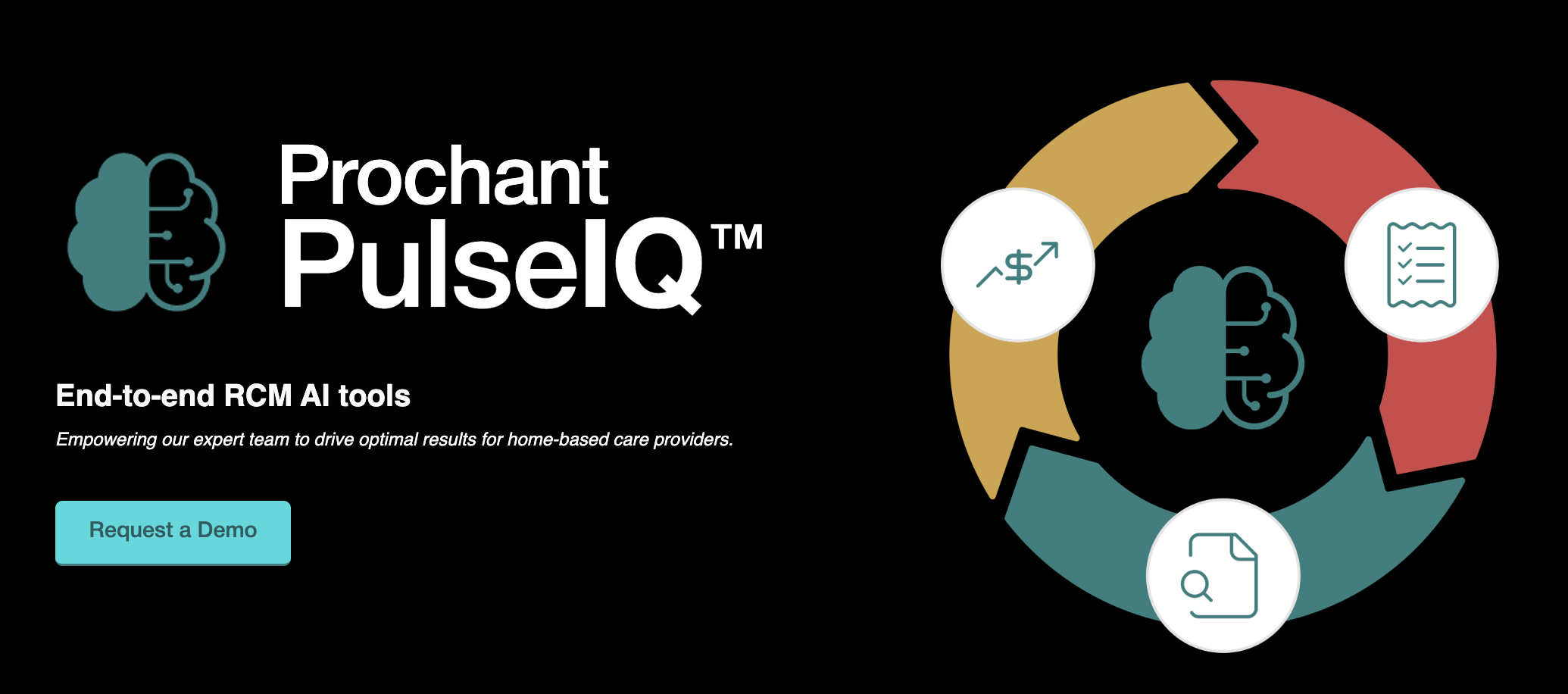
Prochant PulseIQ™ brings these capabilities together through IntakeIQ, BillingIQ and CollectionIQ, applying AI driven automation, predictive insights and guided workflows across key stages of the revenue cycle.
For home-based care providers, the opportunity is not simply to automate more work. It is to make better decisions earlier, reduce preventable revenue cycle friction and help teams focus their expertise where it can have the greatest impact.
Frequently Asked Questions
How can AI improve intake processes for home-based care providers?
AI can help intake teams catch problems before a claim is ever created by identifying missing referral information, validating patient demographics, extracting data from clinical and insurance documents, supporting insurance verification and flagging incomplete order information. Tools like Prochant's IntakeIQ connect these workflows with EHR systems to reduce avoidable issues before they reach billing.
How does AI help reduce claim denials in billing?
AI can review claims before submission to identify missing payer requirements, incorrect modifiers, incomplete information, potential conflicts with payer rules and recurring errors. Prochant's BillingIQ applies this automated review to catch issues earlier, reducing the work involved in researching, correcting and resubmitting denied claims.
How can AI help collections teams prioritize accounts?
AI can help collections teams focus on accounts with the strongest recovery potential by evaluating payment likelihood, claim value and the action required to move an account forward. Prochant's CollectionIQ uses payment probability and guided workflows to help teams determine which denials to work first based on payer and denial type.
What is Prochant PulseIQ™?
Prochant PulseIQ™ brings together IntakeIQ, BillingIQ and CollectionIQ to apply AI driven automation, predictive insights and guided workflows across key stages of the revenue cycle, from intake through billing and collections.
Does AI replace revenue cycle staff, or does it support them?
AI is designed to strengthen the work of experienced revenue cycle professionals rather than replace them. Teams still bring the payer knowledge, reimbursement expertise and judgment needed to navigate complex claims, while AI complements that expertise by processing information at scale and directing attention to areas that need action.